I used ChatGPT to “create a lesson plan for a one-hour lesson about fermentation and its real-world applications, including a 30-minute activity to help students remember what they learned and sources.” ChaptGPT provided an in-depth overview of a lesson plan that met all the requested parameters. Including learning objectives, assessment ideas, and a wrap-up activity. The sources it listed were mainly from Britannica, Wikipedia, and Chemistry LibreTexts, and from my general understanding of fermentation processes, the science described is accurate. The classroom activity involved setting up station for students to rotate through, each station focuses on a specific type and application of fermentation (Bread and alcoholic fermentation; yogurt and lactic acid fermentation; and ethanol as biofuel). I would need to do some research into the validity of these topics but they feel like solid jumping-off points at least.
I asked perplexity.ai to outline the differences between resident, Biggs, and off-shore killer whales. The response included accurate information from verifiable sources and even summarized the information into a really concise overview in a table format for easy comparison. I noticed, that many of the sources were relatively old (2+ years) and very few were peer-reviewed research articles. When I asked the AI to only use peer-reviewed sources, it responded saying it wouldn’t be able to do so reliably.
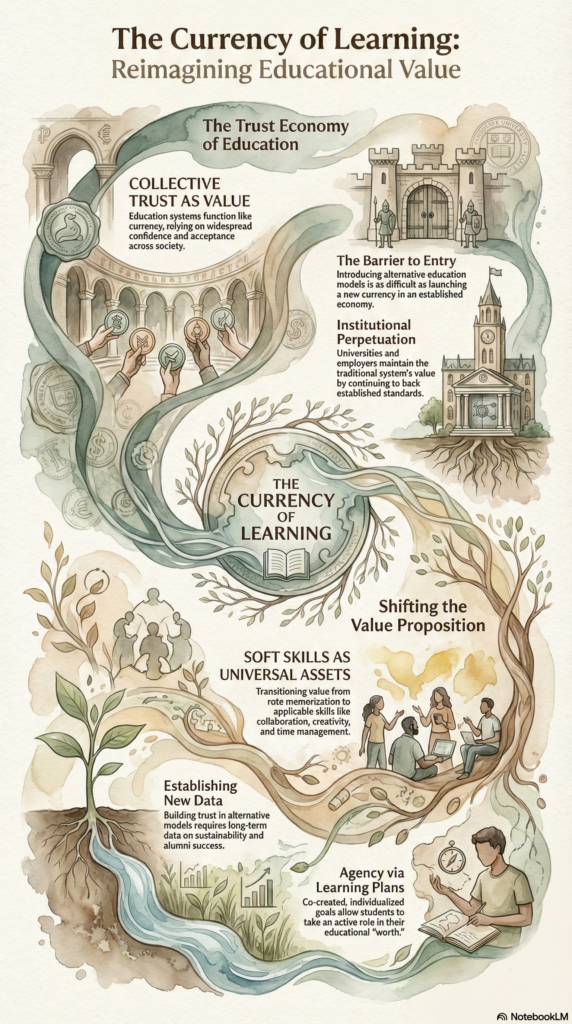
I created an infographic of my Week 1 Reflection blog post using NotebookLM. I specifically asked for it to “use neutral, earthy colours and a watercolour style, and focus the infographic on the currency of learning concept.” I haven’t spotted any glaring spelling errors in the graphic and I think the overall summarization and organization is pretty decent.
As a science teacher, I personally plan on using AI to help create rubrics (I’ve been recommended magicschool.ai) and for brainstorming engaging in-class activities and demonstrations.
In my own education experience, I’ve mainly used AI to help summarize long articles and create study guides for exams.