EDCI 336 - Reflections and Inquiries

Author: annika (Page 2 of 2)

Week 2 Reflection

Multimedia Learning

From my perspective, multimedia learning is a framework that sounds simple and intuitive but is much harder than expected to execute effectively. Watching and listening to Dr. Pastore, I reflected on the countless zoom classes, educational videos, and in-person presentations I’ve experienced in which the presenter misused multimedia learning tools. Of course, good intention was always there, I think the general understanding is that if you throw as many different modalities into your lesson as possible it’ll be beneficial to students of all learning types because every possible method of information delivery is present. I remember getting frustrated with myself for losing focus or failing to process the lesson. It was all right in front of me, in text, visual and audio format, why wasn’t any of it actually engaging me? Now I understand that there’s a lot more to consider when designing a multimedia lesson. It has as much to do with learning psychology as it does with technology. I think this goes to show that less is more sometimes, although students do appreciate opportunities to process information through diverse modalities, bombarding their senses with excess information is incredibly counterproductive. Looking forward into my future role as an educator, I’m going to be mindful of the way I design my lesson so that multimedia learning tools are incorporated mindfully and logically.

Here’s an article from PBS with some suggestions for multimedia learning in science classrooms: https://www.pbs.org/kqed/oceanadventures/educators/sciencemedia/

iNaturalist Observation Upload Tutorial

This is a tutorial I created for iNaturalist using screen record on my iPad. I incorporated some interactive elements including a multiple choice question, a true/false question, and a summary question.

Thinking of how I might incorporate H5P tools into secondary science classrooms, I like the idea of creating interactive videos to be posted on a platform like Google Classroom in case a student misses an in-person lesson. Compared to just passively watching a video of a lesson, having interactive elements like multiple-choice questions and fill-in-the-blanks provide opportunities for meaningful student engagement. I’m sure there are more H5P tools that are applicable for a science classrooms, but I’ll need to spend some more time exploring these tools first.
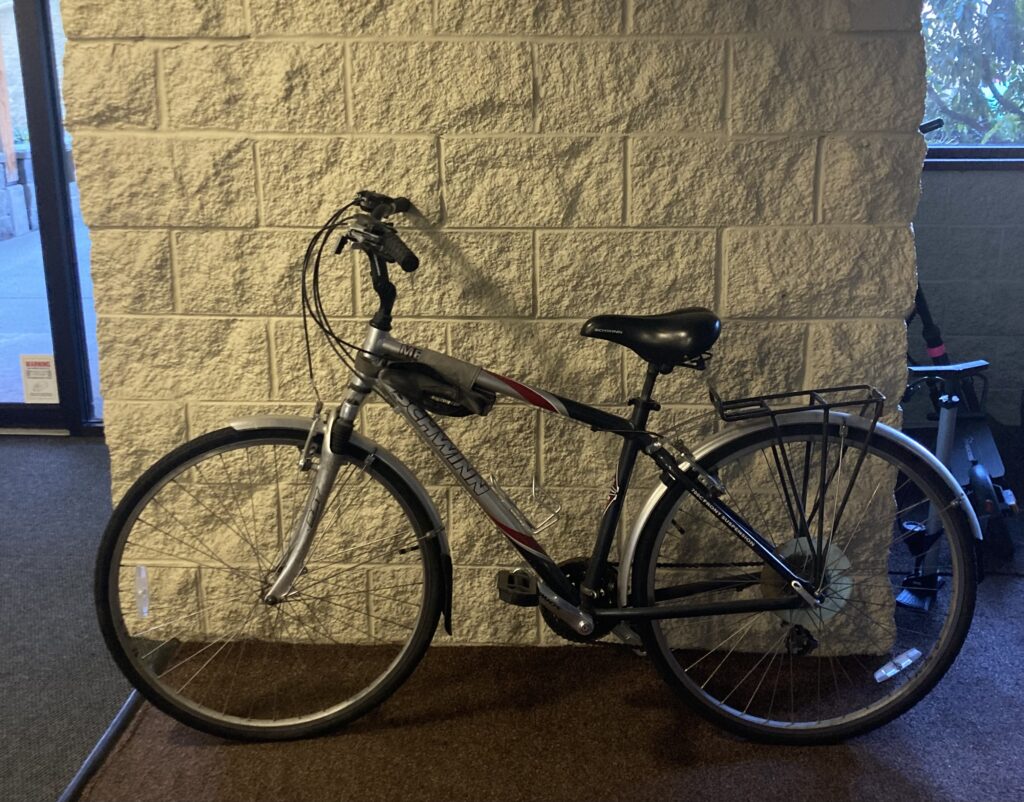
Beginning of the Bike Journey

I adopted my mom’s bike 3 years ago and have used it approximately 6 times since. Partially because cycling in Victoria makes me fear for my corporal safety, partially because I don’t like showing up places sweaty so biking doesn’t really fit as a convenient mode of everyday transportation, and partially because the tires are chrononically flat and the handlebars move up and down of their own volition. So this bike has sat, stagnant as pond water, in my apartment’s bike room for 2.5 years. I walk past it everyday, feeling a sharp stab of guilt in my heart as I avert my gaze from that dark corner of the bike room.

But things are going to change now. Over the next couple months I’m going to get my bike in adequate riding condition and establish a weekly bike ride routine with the ultimate goal of biking to class one day toward the end of the semester and hopefully not be too egregiously sweaty or full of terror upon arrival. With this blog, I’ll document the tune-up process, my weekly bike ride adventures, and the lead-up to my bike-to-school experience. Through this journey, I endeavour to gain confidence in road cycling, build skills in bike mechanics, and develop a passion for cycling that has laid dormant in a musty bike room for the past 2.5 years.

The bike, neglected no longer.

I plan on taking advantage of a diverse toolbox of resources for this project. Including my personal connections to amateur bike experts, the services of my neighbourhood bike shop, the ParkTool Youtube channel, and the Strava app.

Stay tuned for more…

Reflection 1

The film “Most Likely to Succeed” is about High Tech High and its alternative education model that focuses on developing soft skills and cross-curricular student-led projects as opposed to teaching curricular content in a traditional classroom setting. I appreciated the brief history lesson on the creation of the modern education system because I think that it’s a topic that we don’t formally address in this program despite it being so indicative as to why education is currently structured the way it is and as a reminder that this structure is not set in stone and isn’t a sacred rule by any means.

I believe that education does need to be reimagined. Like the documentary describes, the “role” of the human has changed drastically since our current education model was introduced and the way children and adolescents prepare to enter professional society should change as well. I appreciate High Tech High’s focus on developing soft skills like collaboration, time management, and creativity that are much more universally applicable to the “real world” than rote memorization and regurgitation of facts.

While watching the documentary and listening to class discussion, I’ve been comparing education to currency. From my understanding, modern currency systems are based on collective trust in the value of a particular token or symbol. This collective trust isn’t easy to establish because it requires a significant amount of confidence and acceptance across a large group of people. Education works similarly in that there is long established collective trust in the current system. Regardless of how intrinsically valuable the actual education is for its students, post-secondary institutions and employers continue to perpetuate a certain value for this education system. Therefore, similar to how hard it is to introduce a brand new currency into an already-established economy, it’s extremely difficult for alternative education models to gain traction when the majority of universities and employers are still backing the traditional system.

High Tech High’s education model is inspiring, but can’t necessarily be the blueprint that all schools aspire to become. It just isn’t feasible. And with High Tech High still being relatively new, there is very little information available with regard to the system’s long term sustainability and alumni success. Until more data becomes available and more collective trust can be established, smaller shifts can be made within the current model in order to better prepare students for the current age. As a science teacher, I’m excited by the prospect of developing holistic, project-based assignments for my students that incorporate a blend of hard and soft skills (similar to High Tech High’s projects), and address post-secondary science expectations as well as real world applications.

This video outlines some key components of successful project-based learning at a secondary school level.

Learning Plans are a set of individualized, learner-centred goals and strategies used to reach a desired learning outcome. In contrast to a Lesson Plan (a teacher-led script designed for an entire class to follow), Learning Plans provide an opportunity for students to engage with their learning on a deeper level as they have agency in the creation of their personalized goals and desired outcomes. I found this info sheet created for the UBC Med program. Although some of the information and the activity on the second page is specific to medical students, I think the overall description and advice is applicable to high school teachers as well. This speaks to the versatility of a Learning Plan. They can be just as effective for kindergarteners as they are for medical students and the essence stays consistent. Co-created Learning Plans allow students to take an active role in their educational goal-setting and these goals can be incredibly specific to that student’s interests, needs, and potential.

Newer posts »

© 2026 Annika’s Blog

Theme by Anders NorenUp ↑